df <- data.frame(
  age = c(25, 30, 45, 52),
  income = c(20000, 35000, 50000, 62000),
  group = c("A", "A", "B", "B")
)Validate AI-Generated Data Before Using It
A small habit that prevents big mistakes
ai
workflows
data-quality
R-Hacks N.15
AI tools can now generate data, simulate datasets, and write transformation code in seconds.
This is useful. But it introduces a new risk.
Note
AI-generated data often looks correct even when it is not.
The problem is not generation. It is validation.
This R-Hack introduces a simple habit: always check AI-generated data before using it in analysis.
1️⃣ A Typical Situation
You ask AI to generate a dataset:
Everything looks fine.
But in real workflows, problems are often subtle:
wrong ranges unrealistic distributions inconsistent categories hidden missing values
These do not always produce errors. They produce misleading results.
2️⃣ A Simple Validation Pattern
Start with basic structure checks:
3️⃣ Check for Missing and Duplicated Values
colSums(is.na(df))
any(duplicated(df))
4️⃣ Check Logical Consistency
5️⃣ A Small Reusable Habit
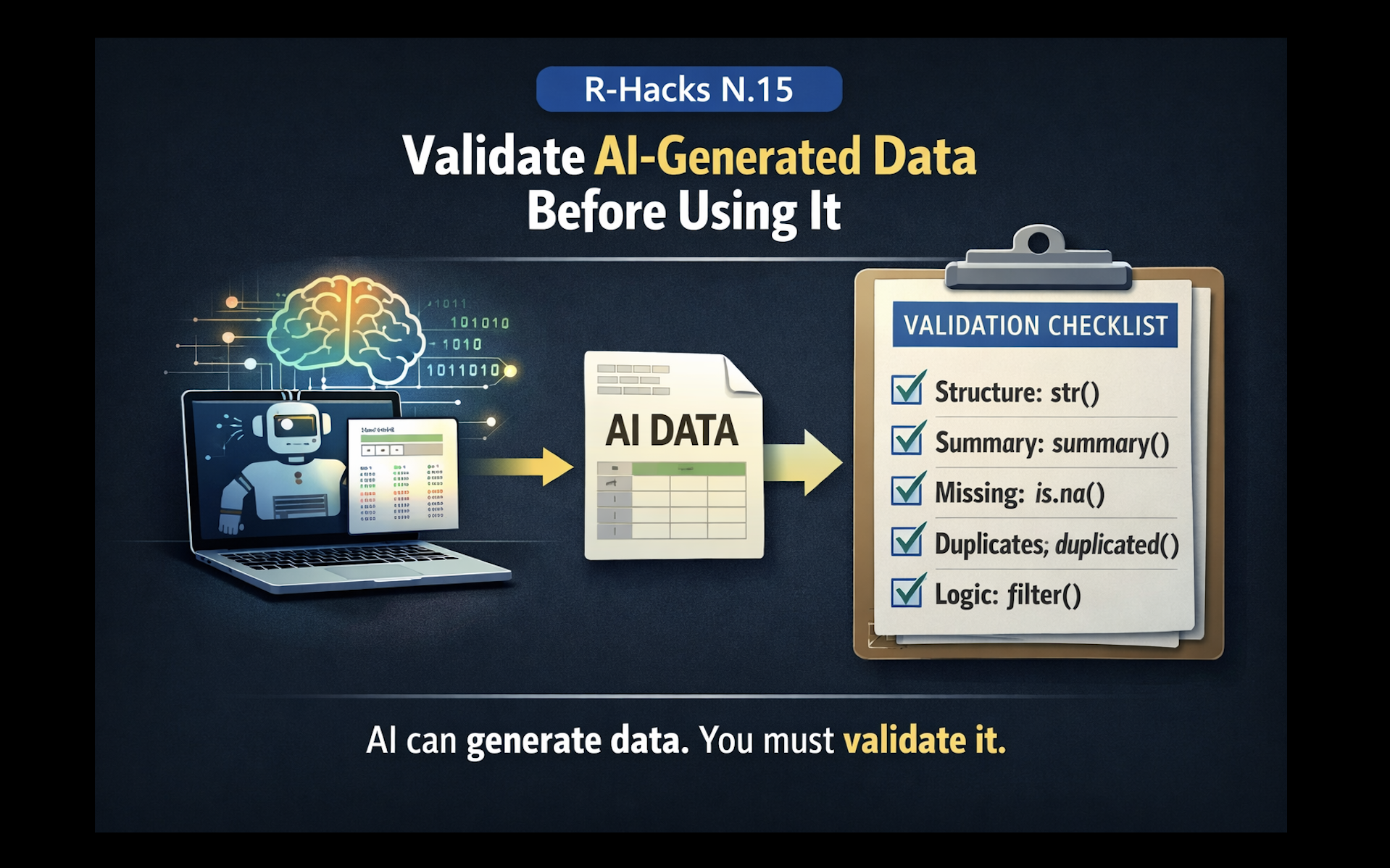
structure → str()
summary → summary()
missing → colSums(is.na())
duplicates → duplicated()
logic → simple filters
Tip
AI accelerates workflows. Validation protects them.
Note
In Short
•   AI-generated data may contain subtle issues
•   structure checks reveal hidden problems
•   missing values and duplicates must be verified
•   logical consistency matters as much as format
•   validation should be a standard habit
Tip
If you want to stay up to date with the latest events and posts from the Rome R Users Group:
👉 https://www.meetup.com/rome-r-users-group/